I’m a huge fan of Kindles (I got my first one in 2010!) and I love learning all the tips and tricks on how to get the most out of them!
One of my favorite Kindle features is the ability to change the font size on your Kindle. This is great if your eyes struggle with small text and it’s especially helpful for kids who are overwhelmed by small text – I’ve heard from lots of parents that their kids can handle larger books on their Kindle because it doesn’t look too big and hefty (like a 500 page paperback!) and they can make the text as big as they want.
If you don’t know how to change the font size on Kindle, there are several ways to do it. I’ll show you both!
How to Change the Font Size on Your Kindle ereader
This is the easiest way to change the font size on your Kindle ereader.
The first step, open a book. Once you have some text on your screen, you simply place two fingers on your screen and do a pinch motion.

Pinching your fingers together creates text smallerwhile stretching your fingers, make the font bigger. The concept is the same as the one you use to zoom on your smartphone.
(Keep in mind, you can’t do this in the Kindle app).
How to Change the Font Size on Your Kindle Apps
First, open the book in your Kindle app. Next, tap the top of the screen to make the toolbar appear.
Select the “Aa” icon.

The default is “Font” but if not, select “Font” and use the slider bar to make your font smaller or larger. You can also change the font you want, along with the spacing of your text!
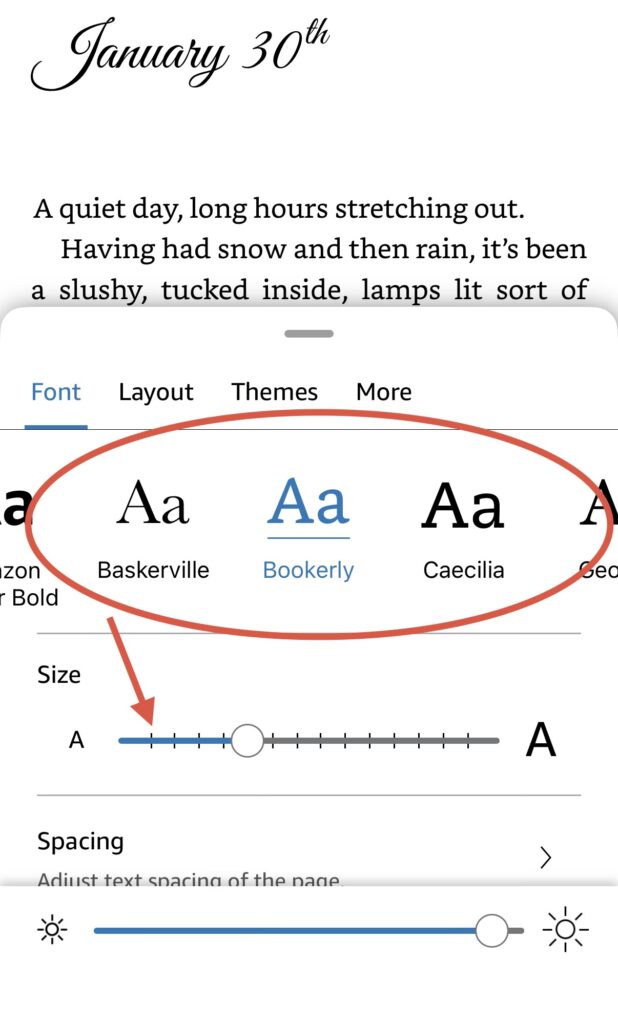
These steps also work on Kindle eReaders with all the additional options available.
And that’s all!!
Do you have follow-up questions about how to change the font size on your Kindle or additional Kindle questions?
If you liked this post on how to change font size on Kindle, you might also like these other helpful posts:
PakarPBN
A Private Blog Network (PBN) is a collection of websites that are controlled by a single individual or organization and used primarily to build backlinks to a “money site” in order to influence its ranking in search engines such as Google. The core idea behind a PBN is based on the importance of backlinks in Google’s ranking algorithm. Since Google views backlinks as signals of authority and trust, some website owners attempt to artificially create these signals through a controlled network of sites.
In a typical PBN setup, the owner acquires expired or aged domains that already have existing authority, backlinks, and history. These domains are rebuilt with new content and hosted separately, often using different IP addresses, hosting providers, themes, and ownership details to make them appear unrelated. Within the content published on these sites, links are strategically placed that point to the main website the owner wants to rank higher. By doing this, the owner attempts to pass link equity (also known as “link juice”) from the PBN sites to the target website.
The purpose of a PBN is to give the impression that the target website is naturally earning links from multiple independent sources. If done effectively, this can temporarily improve keyword rankings, increase organic visibility, and drive more traffic from search results.